Overview of events in 927
The year 927 is one of the most important dates in British history. And yet relatively few people know of its significance. With the death that year of Sihtric, the viking king in York, King Æthelstan was able to bring the kingdom of Northumbria within his control. In doing so, he was the first person to create the ‘kingdom of the English’, the forerunner to modern England.
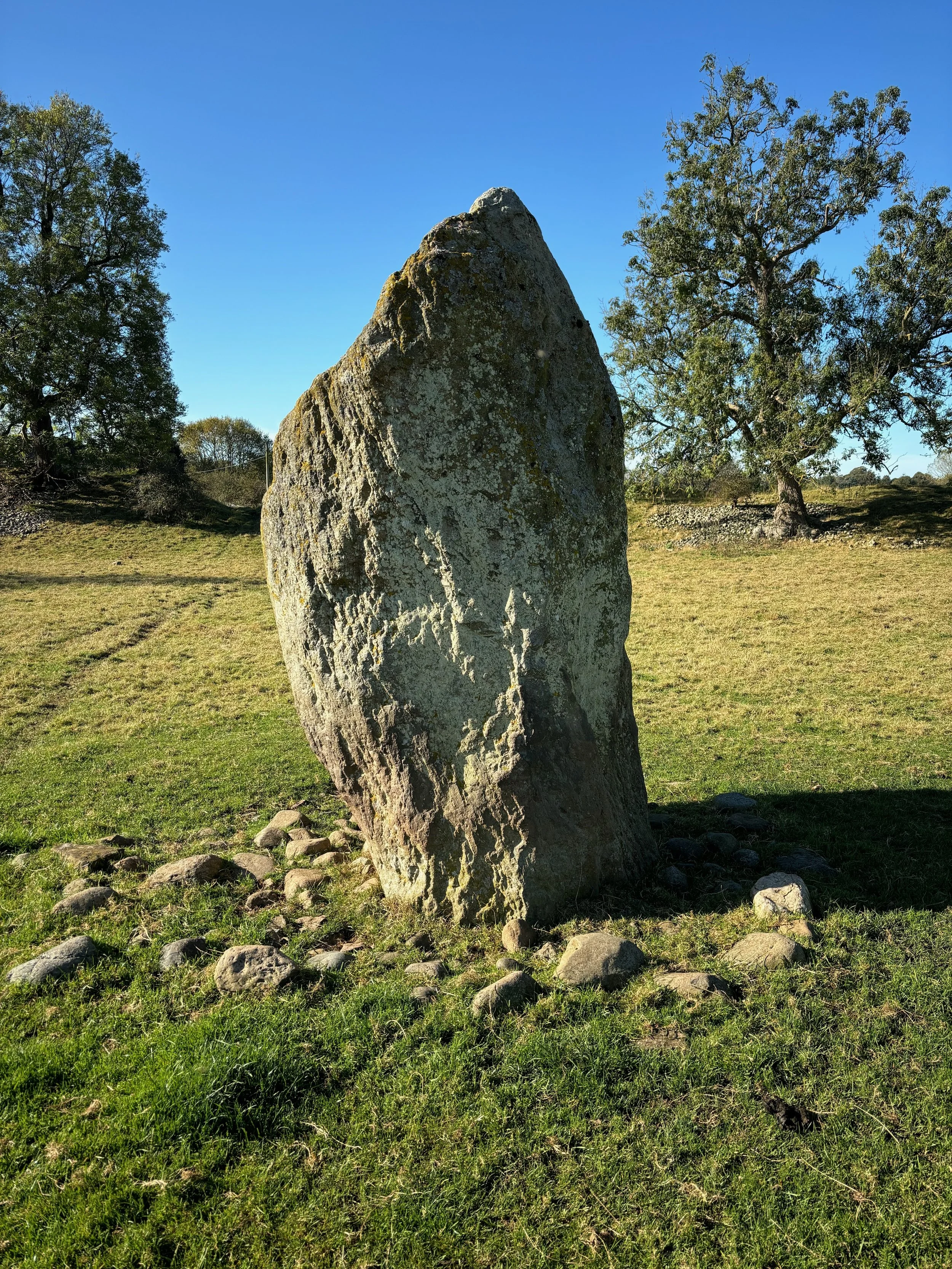
Mayburgh Henge
12 July, 927: The meeting at Eamont Bridge
Having taken York within his control in 927, Æthelstan marched further north and west to Eamont Bridge, a town located today just south of modern Penrith, where he held a meeting which involved the most significant kings from the British Isles. A record of the meeting is contained within the Anglo-Saxon Chronicle, one of the principal near-contemporary narrative texts. Its annal for 927 is quoted in full at the bottom of this page.
Significance of the Eamont Bridge site
Eamont Bridge was carefully selected by King Æthelstan and his advisers as the meeting place for the kings concerned. In logistical terms the site made sense, since a number of Roman roads coming from the north, south and east all converged in the area. Each king would have brought with him a relatively large retinue of people, with the result that the occasion could have involved several hundred individuals in total.
The location of Eamont Bridge held other value. Its Old English name, æt Eamotum, means literally ‘at the meeting of the rivers’, indicative of its situation at the confluence of the Rivers Eamont and Lowther. The coming together of the rivers therefore held symbolic importance for an occasion which marked the joining of all the kings of Britain, and their recognition that Æthelstan was at that moment the premier king in the British Isles. Eamont Bridge was also situated on the boundary between the north-western kingdom of Strathclyde/Cumbria and that of Northumbria, showing just how far Æthelstan had managed to extend his authority northwards, from his base in Winchester, Wessex. Messages of power were further underlined by the topography of the region, which included these ancient sites of significance: Mayburgh Henge, King Arthur’s Round Table Henge, and the Roman fort Brocavum.
The kings and nobles involved at Eamont Bridge
Hywel Dda (‘the Good’; d. 949 or 950), king of the Welsh kingdoms of Deheubarth and latterly of Gwynedd
Constantine II (d. 952), king of the Scots
Owain ap Hywel (d. c. 930), king of the Welsh kingdoms of Glywysing and Gwent
Ealdred, lord of Bamburgh
and possibly also, Owain ap Dyfnwal (fl. 934), king of Strathclyde/Cumbria
Aftermath
In the immediate aftermath of Eamont Bridge, Æthelstan moved quickly to have his new status recognised. Having been styled the ‘king of the Anglo-Saxons’ (rex Angulsaxonum, in Latin) in his royal diplomas, he could now be restyled the ‘king of the English’ (rex Anglorum). It was an elevated title that reflected the realities of his new-found power. Similar titles were deployed at the same time on coins that circulated in his name, and he would later even lay claim to being the ‘king of all Britain’ (rex totius Britanniae).
Æthelstan had taken with him to Eamont Bridge a poet, who had probably been trained in Europe. Æthelstan commissioned him to write some verses to commemorate what he had achieved, known today by the Latin title, ‘Carta, dirige gressus’ (‘Letter, direct your steps’). In the verses, the poet celebrates the fact that Æthelstan had made ‘Saxonia’ (that is, ‘England’) whole.
Of course it was by no means clear that the ‘kingdom of the English’ created by Æthelstan would endure (nor that everyone would buy into it). Even during the king’s own lifetime it experienced numerous threats to its existence, most notably in 937 at the famous Battle of Brunanburh at which the viking Óláf Guthfrithson allied with King Constantine II of the Scots, and with King Owain of Strathclyde/Cumbria, in an attempt to overthrow Æthelstan. When Æthelstan died in 939, the ‘kingdom of the English’ fragmented. Óláf Guthfrithson, the very same man who had challenged Æthelstan at Brunanburh, took control in York, thus severing Northumbria from West Saxon control once again. But the idea of ‘England’ was evidently very powerful: over the generations that followed the kingdom would be re-formed once more. Although it would endure many more twists and turns, the ‘England’ first formed by Æthelstan would eventually become a lasting reality.
Entry for the year 927 in the ‘D’ version of the Anglo-Saxon Chronicle:
‘In this year appeared fiery lights in the northern quarter of the sky, and Sihtric died, and King Æthelstan succeeded to the kingdom of the Northumbrians; and he brought under his rule all the kings who were in this island: first Hywel, king of the West Welsh, and Constantine, king of the Scots, and Owain, king of the people of Gwent, and Ealdred, son of Eadwulf from Bamburgh. And they established peace with pledge and oaths in the place which is called Eamont [æt Eamotum], on 12 July, and renounced all idolatry [deofolgeld] and afterwards departed in peace’.